

BBQ Slow-Cooked Trevally with Saltbush, Pepperberry and Lemon Myrtle
There's something special about cooking whole fish on the BBQ — and when you pair it with a premium Australian native seasoning, the result is next level. This recipe for BBQ Slow-Cooked Trevally with Saltbush, Pepperberry and Lemon Myrtle delivers bold coastal flavour with every bite.
Trevally is an underrated BBQ fish — firm, flavoursome, and ideal for low-and-slow cooking in foil. Paired with the Sea Spray Seafood Rub, a small-batch blend of Lemon Myrtle, Saltbush, and Tasmanian Pepperberry, this dish brings authentic Australian flavour to your backyard grill.
Whether you're cooking for a weekend feast or a casual weeknight dinner, this recipe is straightforward, impressive, and packed with native character. If you're serious about BBQ rubs and seasonings made from real Australian ingredients, you're in the right place.
What Makes These Native Herbs Stand Out
Not all seasonings are created equal. The three native herbs in the Sea Spray Seafood Rub each bring something distinct to the table — and together, they create a flavour profile that no imported spice blend can replicate.
Here's what sets each one apart:
- Lemon Myrtle — Native to subtropical Queensland rainforests, Lemon Myrtle has a citral content higher than lemon itself. It delivers a clean, bright, almost floral citrus note that lifts seafood without masking its natural sweetness.
- Saltbush — A hardy coastal and inland shrub, Saltbush carries a savoury, mineral-rich depth. It acts as a natural seasoning agent, reducing the need for added salt while adding complexity and earthiness.
- Tasmanian Pepperberry — Grown in the cool, wet forests of Tasmania, Pepperberry delivers a slow-building warmth that's more aromatic and nuanced than standard black pepper. It finishes with a gentle heat that lingers pleasantly.
These aren't novelty ingredients — they're world-class flavour agents that happen to grow right here in Australia.

Flavour Profile: What to Expect
The Sea Spray Seafood Rub is built around balance. It's not a one-note seasoning — it layers citrus brightness, savoury depth, and gentle heat in a way that complements rather than competes with the fish.
When applied to trevally and slow-cooked in foil, the rub transforms:
- The Lemon Myrtle infuses the flesh with a fragrant citrus warmth
- The Saltbush draws out the fish's natural umami and adds a coastal, mineral quality
- The Pepperberry provides a subtle spiced finish that builds as you eat
The result is a fish that tastes distinctly Australian — clean, complex, and deeply satisfying. It's the kind of flavour that makes guests ask what you used.
How to Use the Sea Spray Seafood Rub
The Sea Spray Seafood Rub is versatile enough to use across a wide range of cooking methods and seafood types. For this recipe, we're using it as a wet rub — combined with olive oil or butter and applied generously to the whole fish before wrapping in foil.
Beyond trevally, this rub works brilliantly on:
- Whole snapper or barramundi on the BBQ
- Prawns tossed in the rub and grilled on skewers
- Salmon fillets baked in the oven
- Scallops pan-seared with butter and a pinch of the blend
- Grilled vegetables or corn for a coastal-inspired side
Use approximately 1–2 tablespoons per kilogram of fish. For a deeper flavour, allow the seasoned fish to rest for 20–30 minutes before cooking. The rub also works as a finishing seasoning — a light dusting over cooked seafood adds an aromatic lift.
Why Choose Australian Native Ingredients
Australian native ingredients have earned serious recognition in the culinary world — and for good reason. They're grown in some of the most biodiverse ecosystems on the planet, and they carry flavour profiles that are genuinely unlike anything found elsewhere.
Choosing native seasonings means:
- Unique flavour — You're cooking with ingredients that can't be replicated by imported alternatives
- Supporting local — Terrablendz sources and blends in Australia, keeping your purchase within the local economy
- Small-batch quality — Every blend is crafted in small batches to ensure freshness and consistency
- Ingredient transparency — You know exactly what's in the blend and where it comes from
- Sustainability focus — Native plants are well-adapted to Australian conditions, requiring fewer inputs to grow
When you reach for a Terrablendz rub, you're not just seasoning food — you're making a considered choice about quality, provenance, and flavour.
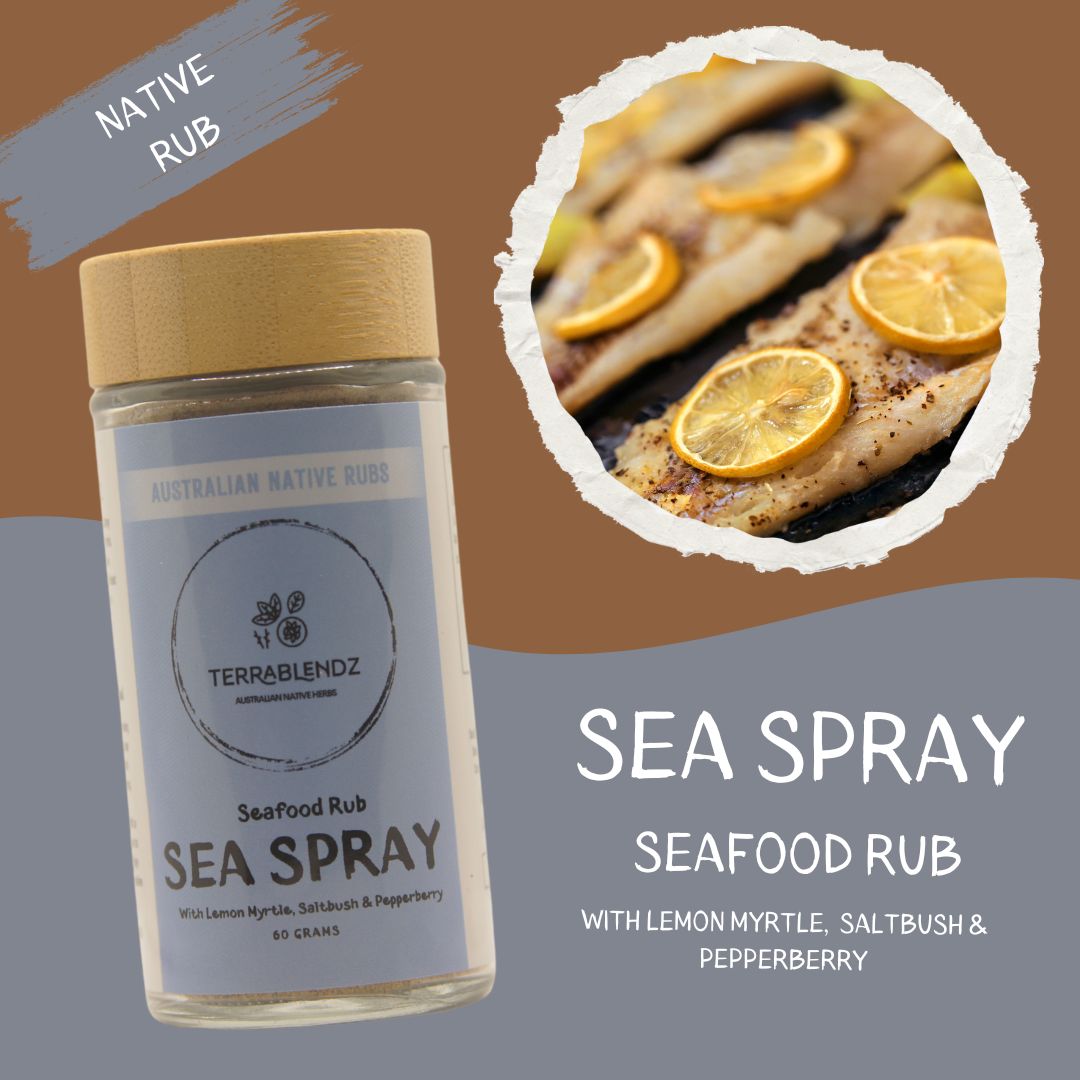
BBQ Slow-Cooked Trevally in Foil — The Recipe
This method keeps the fish moist, allows the native herbs to fully infuse, and requires minimal fuss. Low heat and a tight foil wrap do the heavy lifting.
Ingredients:
- 1 kg whole trevally, gutted and scaled
- 2 tbsp Terrablendz Sea Spray Seafood Rub
- 2 tbsp olive oil or melted butter
- 1 lemon, sliced
- 3 garlic cloves, sliced
- 2 sprigs fresh herbs (lemon myrtle, parsley, or thyme)
- 1 tbsp white wine or stock (optional)

Method:
- Preheat the BBQ: Set to low heat (150–160°C) and close the lid to stabilise the temperature.
- Prepare the fish: Pat the trevally dry with paper towel and make 3–4 shallow diagonal cuts on each side to help the rub penetrate.
- Season: Mix the Sea Spray Seafood Rub with olive oil or melted butter to form a paste. Coat the fish thoroughly inside and out, working the rub into the cuts.
- Stuff the cavity: Fill with lemon slices, garlic, and fresh herb sprigs.
- Wrap in foil: Place the fish on a double layer of heavy-duty foil. Drizzle any remaining oil mixture over the top and add white wine or stock if using. Seal the foil tightly.
- Cook: Place on the BBQ grill, close the lid, and cook for 35–45 minutes, turning the parcel halfway through.
- Check doneness: Carefully open the foil — the fish is ready when the flesh flakes easily with a fork.
- Serve: Transfer to a platter and serve immediately with a fresh salad or grilled vegetables.
BBQ Tips for Perfect Slow-Cooked Fish
- Low and slow is the rule — High heat will dry out the fish. Keep the BBQ at 150–160°C throughout.
- Double-wrap the foil — A second layer prevents tears and keeps all the steam and flavour locked in.
- Rest before serving — Let the parcel sit for 3–5 minutes after removing from the heat. The fish continues to cook slightly and the juices redistribute.
- Fresh fish matters — The better the quality of your trevally, the better the result. Ask your fishmonger for the freshest whole fish available.

Get Your Sea Spray Seafood Rub
Ready to bring this recipe to life? The Sea Spray Seafood Rub is available now from Terrablendz — small-batch, Australian-made, and crafted for serious home cooks and BBQ enthusiasts.
Here's why it belongs in your pantry:
- Blended with premium Lemon Myrtle, Saltbush, and Tasmanian Pepperberry
- No artificial flavours, fillers, or preservatives
- Versatile across fish, shellfish, poultry, and vegetables
- Small-batch production for consistent quality
- Australian-owned and operated
Shop the Sea Spray Seafood Rub now and elevate every seafood dish you cook.

Related Recipe Inspiration
If you enjoyed this recipe, the flavour combination of Lemon Myrtle, Saltbush, and Pepperberry works just as well with other seafood. Our Lemon Myrtle Prawns with Garlic Butter recipe is a crowd-pleasing favourite that showcases the same native herbs in a completely different format.
It's quick, simple, and delivers the same bold Australian coastal character. Perfect as a starter, a side, or a standalone dish for a summer BBQ spread.
For more recipe ideas using Australian native seasonings, visit our full recipe collection — from BBQ mains to marinades, rubs, and everything in between.

Going Deeper: Seafood Dry Rubs with Australian Native Herbs
This recipe is part of a broader approach to cooking with native Australian seasonings. If you want to understand how to get the most out of dry rubs for seafood — including technique, timing, and ingredient pairings — our complete guide to seafood dry rubs with Australian native herbs covers everything you need to know.
It's the definitive resource for anyone serious about cooking seafood with native ingredients — from choosing the right rub to mastering application and cooking methods across different heat sources.
Frequently Asked Questions
Can I use the Sea Spray Seafood Rub on fish other than trevally?
Absolutely. The Sea Spray Seafood Rub is designed to work across a wide range of seafood. It performs exceptionally well on whole fish like snapper, barramundi, and bream, as well as fillets, prawns, scallops, and even squid. The native herb blend is balanced enough to complement both delicate and robust seafood flavours.
What is the best BBQ temperature for slow-cooking whole fish?
For whole fish in foil, aim for 150–160°C with the lid closed. This low-and-slow approach allows the fish to cook evenly without drying out. At this temperature, a 1 kg whole fish will typically take 35–45 minutes. Always check for doneness by testing whether the flesh flakes easily near the thickest part.
What does Lemon Myrtle taste like in a seafood rub?
Lemon Myrtle delivers a clean, bright citrus flavour that's more intense and aromatic than standard lemon zest. In a seafood rub, it lifts the natural sweetness of the fish and adds a fragrant, almost floral quality. It's one of Australia's most distinctive native flavours and pairs particularly well with white-fleshed fish and shellfish.
Is Tasmanian Pepperberry very spicy?
Tasmanian Pepperberry is warming rather than fiery. It has a slow-building heat that's more aromatic and complex than standard black pepper. In the Sea Spray Seafood Rub, it's balanced with Lemon Myrtle and Saltbush, so the overall heat level is mild and approachable — suitable for most palates, including those who prefer lighter seasoning.
How does Saltbush work as a seasoning?
Saltbush acts as a natural mineral-rich seasoning that adds savoury depth without the sharpness of table salt. It has an earthy, slightly briny quality that works particularly well with seafood, drawing out the fish's natural umami. In the Sea Spray Seafood Rub, it provides the savoury backbone that ties the Lemon Myrtle and Pepperberry together.
A Note on Sustainability and Flavour
At Terrablendz, the commitment to quality starts with ingredient sourcing. The native herbs used in the Sea Spray Seafood Rub — Lemon Myrtle, Saltbush, and Tasmanian Pepperberry — are well-adapted to Australian growing conditions and harvested with sustainability in mind.
Small-batch production means every jar is fresh, consistent, and made without compromise. There are no fillers, no artificial flavours, and no shortcuts. Just premium Australian native ingredients, blended to bring out the best in your cooking.
Choosing Terrablendz means choosing flavour with purpose — supporting local producers, reducing food miles, and cooking with ingredients that are genuinely extraordinary. That's a combination worth getting behind, one BBQ at a time.
Australian food safety standards emphasise the importance of proper storage and preparation when seasoning seafood, helping maintain both safety and quality.
For more on cooking with native Australian herbs and spices, explore our complete guide to seafood dry rubs with Australian native herbs — the essential read for anyone looking to cook with confidence and native character.